Our research tackles some fundamental evolutionary questions such as speciation, adaptation, and introgression. In particular, our work focuses on integrating experimental and computational approaches to study adaptive introgression in model and non-model organisms. Our research interests also include investigating anti-predator adaptation such as mimicry, aposematic coloration, and camouflage in insects.
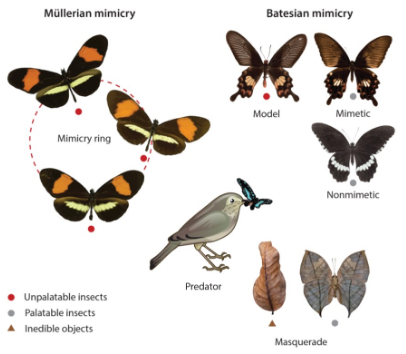
Evolutionary Genetics of Insect Mimicry and Masquerade
As classic examples of adaptive evolution, insect mimicry and masquerade have been studied extensively for more than a century. Both phenomena protect insects from predators and are widely observed in nature. Previous research on phenotypic, genetic, phylogenetic, and behavioral aspects has laid a solid foundation for in-depth investigations. Recent advances in genomic data resources, analytical methodologies, and gene-editing tools have greatly facilitated the elucidation of the genetic and developmental mechanisms underlying insect mimicry and masquerade. This review provides a comprehensive overview of recent progress, encompassing key insect lineages such as Lepidoptera, Hymenoptera, Odonata, and Mantodea; highlights the pivotal roles of evolutionary hot spot genes, noncoding sequences, and structural variations in driving phenotypic diversification and adaptation; and offers novel insights into fundamental evolutionary questions such as sexual dimorphism, convergent evolution, and speciation. Furthermore, this review outlines the ongoing challenges and future prospects in the evolutionary genetics of insect mimicry and masquerade.
Link: https://doi.org/10.1146/annurev-ento-012326-031758
Link: https://doi.org/10.1146/annurev-ento-012326-031758
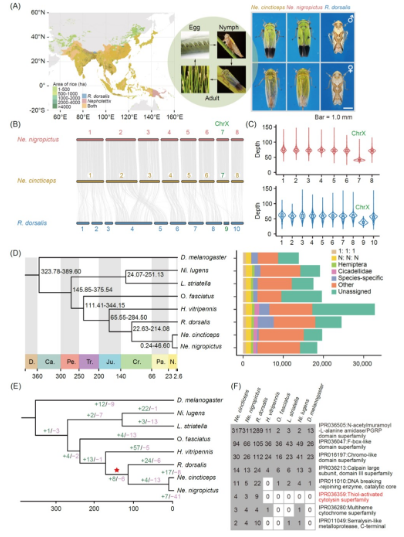
Horizontal gene transfer promotes insect adaptation mechanisms
Sap-sucking insects, represented by the globally distributed leafhoppers, have evolved a wide range of adaptive traits and play multiple ecological roles. However, their successful survival strategies in nature remain poorly understood. To explore the adaptive mechanisms of sap-sucking insects, we established a research system using three representative leafhopper species from the same family and found that they have acquired multiple cholesterol-dependent cytolysins (CDCs) derived from gram-positive bacterial genes. Furthermore, we demonstrated that these CDCs have been domesticated and co-evolved with leafhoppers, ultimately participating in various life activities of the host. Specifically, some CDCs exhibit high cytotoxicity, are specifically expressed in the egg serosa, and affect the feeding behaviors of leafhopper predators; others show non-cytotoxic activity, are specifically expressed in the gut, and may regulate leafhopper growth and development by potentially maintaining the homeostasis of the leafhopper gut microbiome. This study uncovers leafhoppers as a paradigm for understanding how organisms can borrow microbial innovations to address ecological challenges and thrive as agricultural pests. It provides a comprehensive perspective to bridge the genotypes of acquired genes with the phenotypes of adaptive traits and demonstrates how homologous genes from donor organisms undergo functional differentiation in recipient hosts, enabling them to exploit new ecological niches. By decoding these mechanisms, we not only gain fundamental insights into evolutionary processes but also develop powerful strategies for sustainable pest management.
Link: https://onlinelibrary.wiley.com/doi/10.1002/imt2.70179
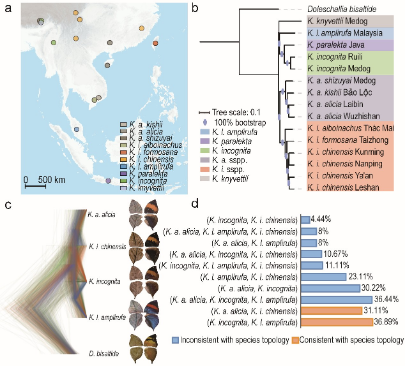
Introgressive hybridization fuels local adaptation in oakleaf butterflies
Hybridization may have multiple impacts on speciation and adaptation. Yet the evidence of adaptive introgression events that have historically occurred between nonradiating or established species is still lacking. The oakleaf butterflies in the genus Kallima include multiple sympatric and incipient species with a known history of diversification and therefore serve as a useful system for addressing historical introgression and adaptation. By integrating population genomics, phylogenomics, CRISPR/Cas9 genome editing and de novo genome assembly, we disentangled the genome-wide pattern of admixture among multiple Kallima species and used the putative introgressed gene pale as an example to reveal its role in scale pigmentation, structure and potentially in sexual dimorphism. We further demonstrated the complex evolutionary history of the Z chromosome largely owing to historical introgression. Our study revealed genome-wide introgression that has historically occurred during butterfly dispersal and differentiation, facilitating the understanding of interspecific relationships and potential local adaptation during gradual evolution.
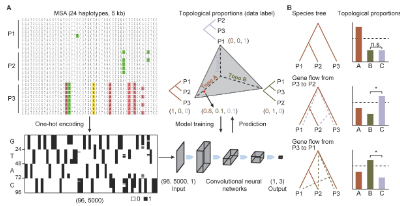
an outgroup-free deep learning method for topology inference and introgression detection
Genetic admixture is a widespread phenomenon across diverse organisms. Conventional algorithms for inferring species relationship and detecting introgression often rely on outgroup data, which can be challenging to obtain and may introduce bias. Given the demonstrated efficacy and flexibility of neural networks in topology inference and introgression detection, we developed a deep learning-based method, ERICA-trio, to reconstruct evolutionary relationships among three taxa without requiring outgroup data. We trained and evaluated this network model using extensive simulated data that cover a broad range of evolutionary scenarios and parameter spaces. Our results demonstrate that ERICA-trio achieves accuracy and robustness comparable to the outgroup-dependent model. Leveraging the predicted topological proportions, we employed two strategies to identify genomic regions with potential introgression: one based on topological symmetry, and the other on the proportions of topology corresponding to gene flow. Both approaches were highly effective, particularly for detecting signatures of adaptive introgression. We further applied ERICA-trio to real genomic data from the Heliconius butterflies and successfully identified adaptive introgressed loci associated with mimicry wing patterns. In summary, our work extends the application of deep learning frameworks in evolutionary genomics, and presents a new tool for outgroup-free phylogenetic inference and introgression detection.
Link: https://doi.org/10.1093/bib/bbag453
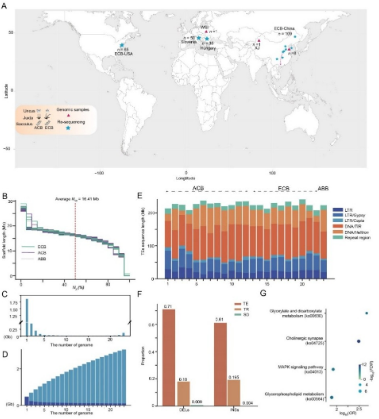
Pangenome analyses reveal divergence and extensive introgression in two global corn pests
Introgression between closely related species can profoundly influence evolutionary trajectories, yet how genomic divergence interacts with introgression, especially in invasive hybridization, remains insufficiently understood. Structural variants (SVs), particularly chromosomal inversions, are key contributors to divergence and may modulate patterns of gene flow. The Asian corn borer (ACB) and European corn borer (ECB), two globally important agricultural pests, provide an excellent system to investigate these processes.We construct a graph-based pangenome from 23 high-quality genome assemblies to characterize genome-wide SVs and introgression between ACB and ECB. We identify over 216,000 SVs, most of which are associated with transposable elements and contribute to interspecific divergence. Population genomic analyses reveal widespread yet asymmetric introgression, predominantly from ACB into ECB populations in China. Introgressed regions are more prevalent in autosomes than in sex chromosomes and are enriched for genes involved in adaptive pathways. In contrast, large inversion regions on the Z chromosome exhibit strong genetic differentiation and reduced introgression, suggesting a role in maintaining species barriers. Notably, a highly divergent region containing the circadian clock gene period (per) shows signatures of selection. Functional validation using CRISPR/Cas9 demonstrates that per significantly influences diapause regulation, linking genomic divergence to adaptive phenotypic variation.
link: https://doi.org/10.1186/s13059-026-04216-6
link: https://doi.org/10.1186/s13059-026-04216-6
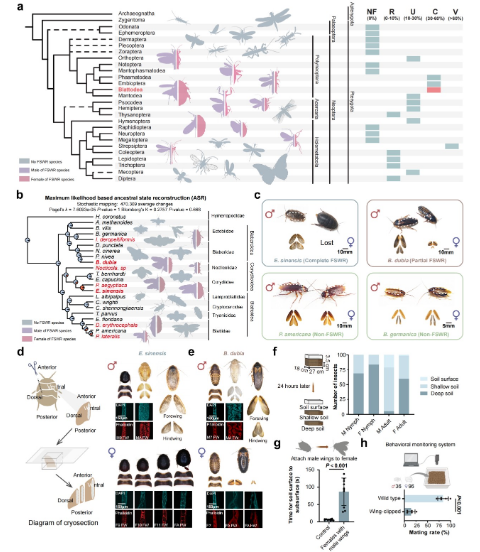
Molecular mechanism of female-specific wing degeneration in insects
Sexual dimorphism represents a striking dimension of morphological diversity both within and across taxa. Female-specific wing regression (FSWR) is common in insects, but the mechanisms underlying this regression remain largely unknown. We reveal that FSWR regulation involves sex-specific isoforms of DSX, a master regulator in the insect sex differentiation pathway, which oppositely regulate the expression of E93, the insect metamorphosis-controlling ‘adult factor’, during wing development. Mechanistically, DSXF represses, while DSXM activates, E93 expression through binding to DSX-binding motifs in FSWR lineages. This differential binding remodels chromatin accessibility and establishes a male-specific three-dimensional topology, facilitating the formation of an enhancer–promoter loop. Consequently, wing morphogenesis gene expression and wing blade cell type specification are promoted in males but suppressed in females. Taken together, our findings provide mechanistic insights into how the rewiring of two conserved signalling hubs into one axis can create regulatory degrees of freedom, thereby generating novel phenotypic variation able to fuel the exploitation of new ecological niches.
link: https://www.nature.com/articles/s41559-026-03107-0#Sec34
link: https://www.nature.com/articles/s41559-026-03107-0#Sec34
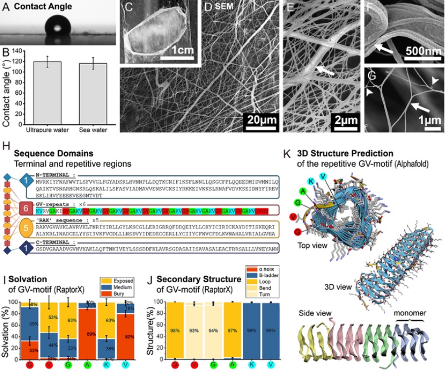
Comparative Genomics Illuminates the Adaptive Evolution of the Intertidal Spider
Spiders are renowned for their ecological versatility and silk-based innovations in materials science, yet marine environments remain virtually uncolonized by this predominantly terrestrial lineage. A striking exception is the obligate intertidal spider genus Desis, whose members have evolved extraordinary physiological and behavioural adaptations to persist in wave-swept, saline habitats that oscillate between land and sea. Here, we present a high-quality, chromosome-scale genome of the intertidal spider Desis jiaxiangi, together with a reference genome of the water spider Argyroneta aquatica, integrated with transcriptomic and proteomic data. This multi-omics framework reveals the genomic architecture underlying adaptation to life at the ocean's edge. Notably, we characterize a novel silk spidroin enriched with a unique GVGAKV motif, which may enhance silk hydrophobicity, and detect the duplication burst of hemocyanin genes likely supporting oxygen transport during submersion. Together, these findings reveal convergent molecular strategies for coping with extreme and fluctuating environments, and demonstrate how genomic innovation enables terrestrial lineages to invade marine-influenced ecosystems. Our study establishes Desis as powerful model for understanding adaptation at terrestrial–marine interface.
link: https://doi.org/10.1111/1755-0998.70147
An ancient genome duplication event drives the development and evolution of spinnerets in spiders
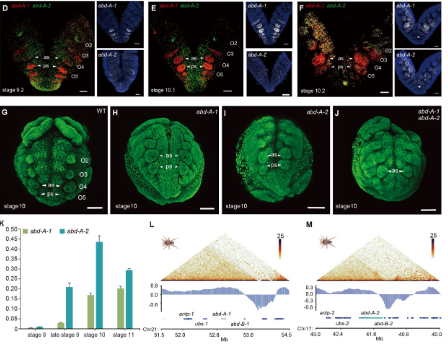
Key appendage innovations have driven the origin and expansion of arthropods, such as spinnerets enabling spiders to occupy three-dimensional space and diversify into more than 53,000 species. Here, we investigate the genetic basis of spinneret emergence in spiders by examining the complex history and functional importance of arachnid genome evolution. Using chromosome-scale genomes from newly sequenced spiders and the whip scorpion, we integrate evidence from macrosynteny and phylogenetic analyses to provide further strong support for a whole-genome duplication (WGD) event that occurred during early Arachnopulmonata evolution. Following this event, the abdominal-A gene pair not only exhibits functional divergence but also jointly facilitates the emergence of spinnerets. Furthermore, we integrated single-cell transcriptomic analyses and functional validation to confirm that the dachshund-1 gene also regulates spinneret development. The network of duplicated gene pairs may form a cornerstone in the origin and evolution of key morphological traits, revealing that the long-term effects of ancient WGDs on innovation and diversification also occurred in arthropods.
link: https://doi.org/10.1126/sciadv.adw2173
Mechanisms of Aristolochic Acid Resistance Insights
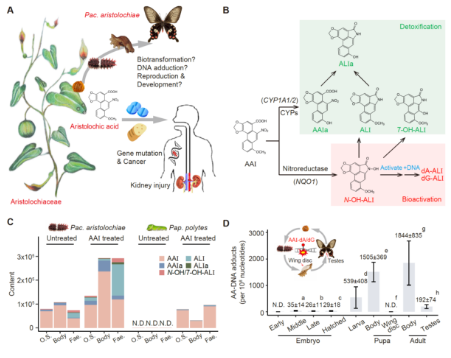
Aristolochic acids (AAs) are natural compounds found in Aristolochiaceae plants, to which humans are frequently exposed through environmental and medicinal sources. AAs are highly nephrotoxic and carcinogenic, mediated by oxidative stress and bioactivation-induced DNA damage and mutagenicity. Nevertheless, some Lepidoptera, including Pachliopta aristolochiae, feed exclusively on Aristolochiaceae and sequester AAs as a chemical defense. This is uncommon in nature and it is not yet fully understood how these insects avoid the lethal effects of AAs. To address this question, we investigate Pac. aristolochiae’s AA-resistance mechanisms by employing metabolic analyses, multiomics analyses, in situ imaging and more. Our findings indicate that AAs may be detoxified through biotransformation and a robust antioxidant system, involving candidate genes such as 15-oxo-prostaglandin 13-reductases (PGRs), cytochrome P450s, and catalases. Unexpectedly, DNA adducts, the covalent binding products from activated AA intermediates, are detected across most life stages of Pac. aristolochiae, revealing that Pac. aristolochiae can maintain genomic integrity despite a substantial burden (reaching over 1800 AA-DNA adducts per 108 nucleotides in adults, approximately 1 adduct per 55 000 nucleotides). Our study highlights insect AA tolerance as a means to discover human protective mechanisms, thereby suggesting new avenues for preventing AA-related diseases.
link: https://doi.org/10.1002/advs.202518072
link: https://doi.org/10.1002/advs.202518072
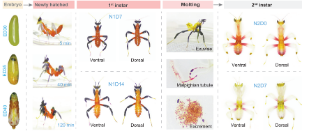
The pigment transporter Redboy confers programmed body colour transition in orchid mantises
Programmed phenotypic transition is prevalent throughout the tree of life, yet the concrete mechanisms that underpin this phenomenon are poorly understood. The orchid mantis (Hymenopus coronatus, Mantodea) is a model study system for programmed body colour transitions that displays a prominent black-red body colour in first-instar nymphs, then switches to a flowery white body colour in later-instar nymphs. Here we reveal that this body colour transition is achieved by the simultaneous excretion of decarboxylated-xanthommatin (red pigment) and the accumulation of uric acid (white pigment) in the epidermis during the first moult. This change in pigmentation is associated with a novel subtype of ABCG pigment transporter that we call ‘Redboy’ in Polyneoptera, which is upregulated by insect steroid hormone (ecdysone) during the first moult of orchid mantises. RNAi assay and pigment analyses show that Redboy functions together with the co-transporter White, exporting red pigments from and concurrently importing white pigments into the epidermal cells. Spectral reflectance analyses and predation experiments reveal that Redboy-conferred programmed body colour transition enhances predator avoidance during the first instar, and both prey attraction and predator avoidance in later instars. Our findings clarify how gene family evolution and hormone regulation coordinate programmed phenotypic transition and promote ecological adaptation in orchid mantises.
link: https://www.nature.com/articles/s41559-025-02737-0